

On July 30, I expected to publish the first Release Candidate of Retraceur 4.0.0. Instead, documenting the new plugin and block discovery and update features led me to reconsider that schedule.
While working on the documentation that day, I identified three additional issues whose fixes deserve to go through beta testing before considering a Release Candidate.
That’s why today’s announcement is about Retraceur 4.0.0-beta3 rather than the Release Candidate that was originally planned. As a result, the release of the stable and final version of Retraceur 4.0.0 has been postponed by a few days and is now tentatively scheduled for August 4.
Documentation is part of the testing process
Developing a feature doesn’t end when the code compiles or when the first tests succeed.
For this third beta, writing the documentation for the new Discovery and Update APIs revealed several behaviors that didn’t match what Retraceur was intended to provide.
If anything, this experience confirms that documentation isn’t just about explaining how software works — it is also an excellent way to validate that it behaves as intended.
A more polished administration experience
Beyond these fixes, this third beta brings several improvements to the administration interface.
The About page has been completely refreshed to present the major changes introduced in Retraceur 4.0.0 and to make it easier for administrators to discover the project’s documentation.
The help tabs and sidebars for the Plugins, Blocks, and Updates administration screens have also been expanded to better reflect the new capabilities introduced in Retraceur.
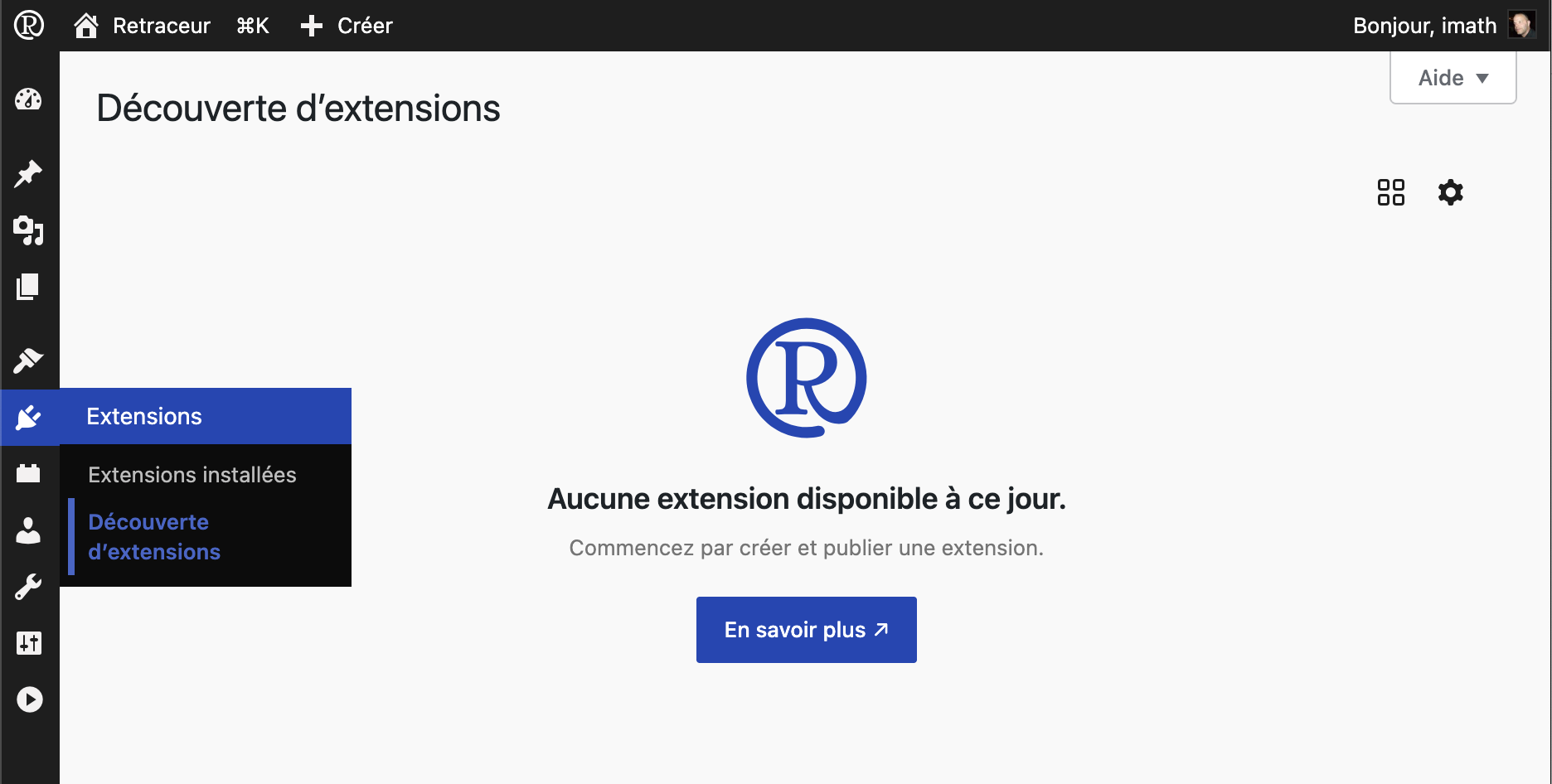
The discovery experience for plugins and blocks has also been improved. Whenever a GitHub topic query returns no results, Retraceur now invites administrators to consult the documentation explaining how to make plugins or blocks discoverable through the API. This currently applies to the Plugins discovery screen, even though plugins can already be made discoverable by using the retraceur-plugin topic.
Finally, several refinements have been made throughout the administration interface: clearer messages when an installation fails, corrected return links after manually replacing a plugin or block, and the removal of the bulk update action for plugins and blocks, which I now consider redundant since the introduction of Retraceur’s centralized update management interface.
Documentation continues to grow
This third beta is also accompanied by significant documentation work. Two existing pages have been updated to reflect the latest improvements introduced in Retraceur 4.0.0.
The documentation about managing updates is no longer limited to the core software. It now also explains how plugin and block updates are handled through the new update system introduced in Retraceur 4.0.0.
The documentation dedicated to block management has also been revised to reflect the latest changes to the administration interface and the simplified manual block upload process.
This beta also introduces a brand new page dedicated to block discovery.
While the documentation published with Beta 2 explained to developers how to make their plugins and blocks discoverable through the API, this new page is intended for administrators.
It explains how the new discovery interface works while emphasizing an important point: Retraceur makes it easier to access freely published resources, but it does not moderate them or perform any security validation. It is therefore up to each user to explore this open crossroads with the same level of care and judgment they would apply when browsing the Web itself.
Looking ahead to the Release Candidate
This third beta is intended to be the final step before the Release Candidate.
If no additional issues are identified over the coming days, the next release will therefore be the Release Candidate, followed by the stable release of Retraceur 4.0.0, now scheduled for August 4.
Thank you to everyone who continues to follow the project’s progress, test development releases, or simply take an interest in Retraceur. Every piece of feedback helps make the project a little more robust.
Featured Photo credits : Zairon CC BY-SA 4.0

Conversation
Rejoignez la conversation depuis Bluesky